


Jan van Staveren
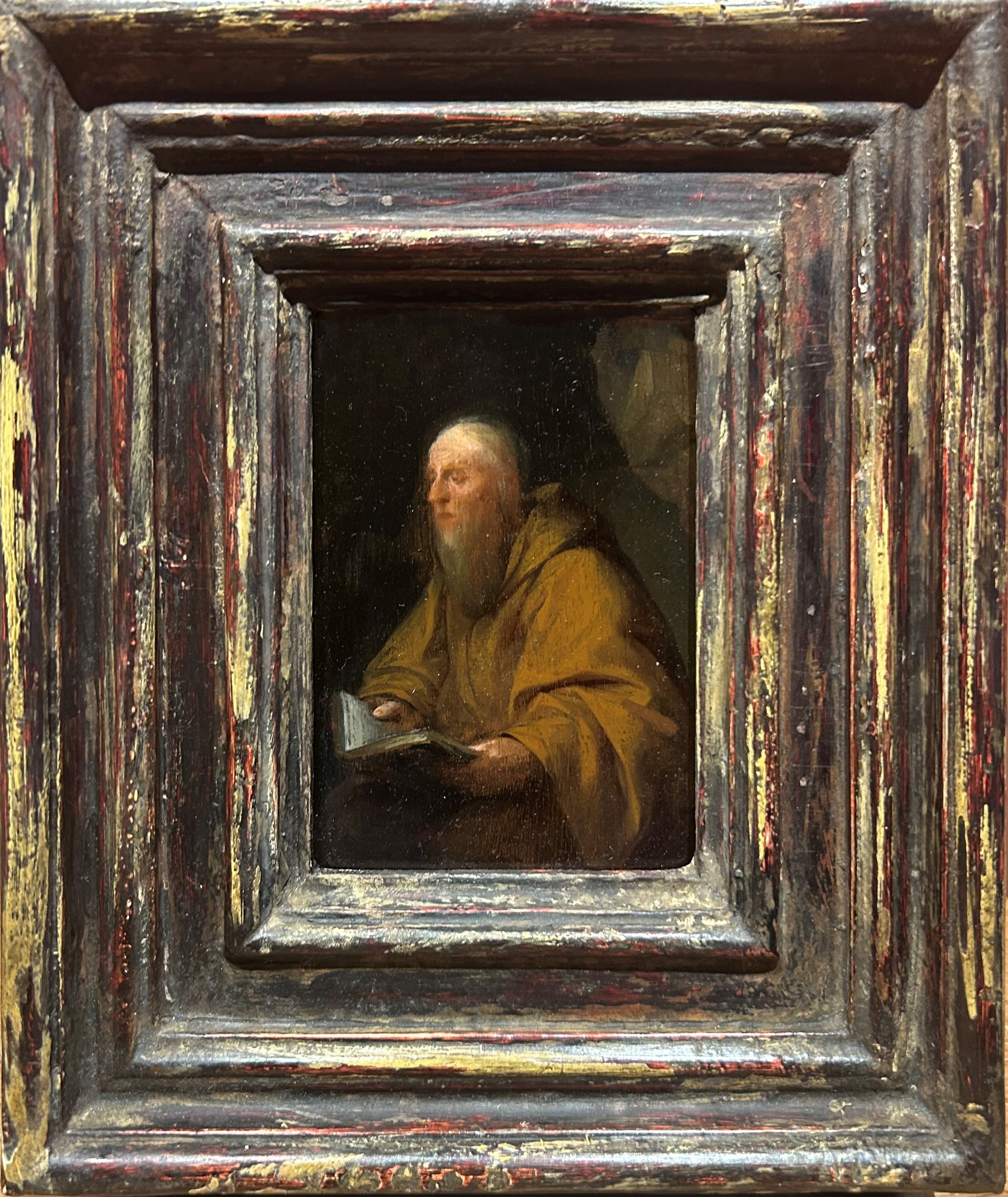
A Hermit Reading
Oil on panel, signed verso
Image size: 3 x 4 inches (7.6 x 10.2 cm)
Hand-made frame
This contemplative artwork, likely intended as a devotional piece given its size, depicts a hermit clad in brown robes as he reads a devotional book in a cave. This subject matter was a popular choice for van Staveren, and it is possible that this work was a cabinet painting, a fashionable format in 17th century Leiden.
The small scale of the painting makes its high level of detail utterly remarkable. The folds of the monk’s clothes, the pages of his book and even the hairs on his beard are distinct and tangible, paying testament to the artist’s high level of skill. The subtlety of the colours and the earthy palette lends itself to the air of devotion and creates an atmosphere of serenity.
Jan Adriaensz van Staveren
Jan van Staveren was born in 1613, the son of an oil miller and soap boiler who served as an alderman and council member for the city of Leiden. It is likely that van Staveren grew up in comfortable, if not wealthy, circumstances, which allowed him to pursue an artistic education at Leiden University. It has been theorised that van Staveren was taught to paint - or was at least strongly influenced by - Gerrit Dou.
In 1644, van Staveren was involved in the founding of Leiden’s Guild of Saint Luke, which was opened four years later. Between 1648 and his passing, van Staveren was a paying member. In 1667, he became the mayor of Leiden, after having served as a council member and alderman like his father.
Van Staveren is known for his genre scenes and portraits, as well as a number of hermit pictures that indicate the influence of Dou. Given his wealth and role as a city administrator, it is likely that painting was a past-time for van Staveren, making his high level of skill all the more intriguing. He was able to paint for his own pleasure, rather than for financial gain.Van Staveren died in either 1668 or 1669, and was buried in the Pieterskerk in Leiden. His sister inherited his paintings and upon the death of her husband, an inventory was drawn up that revealed she had owned 72 of his works.