
Post Impressionism
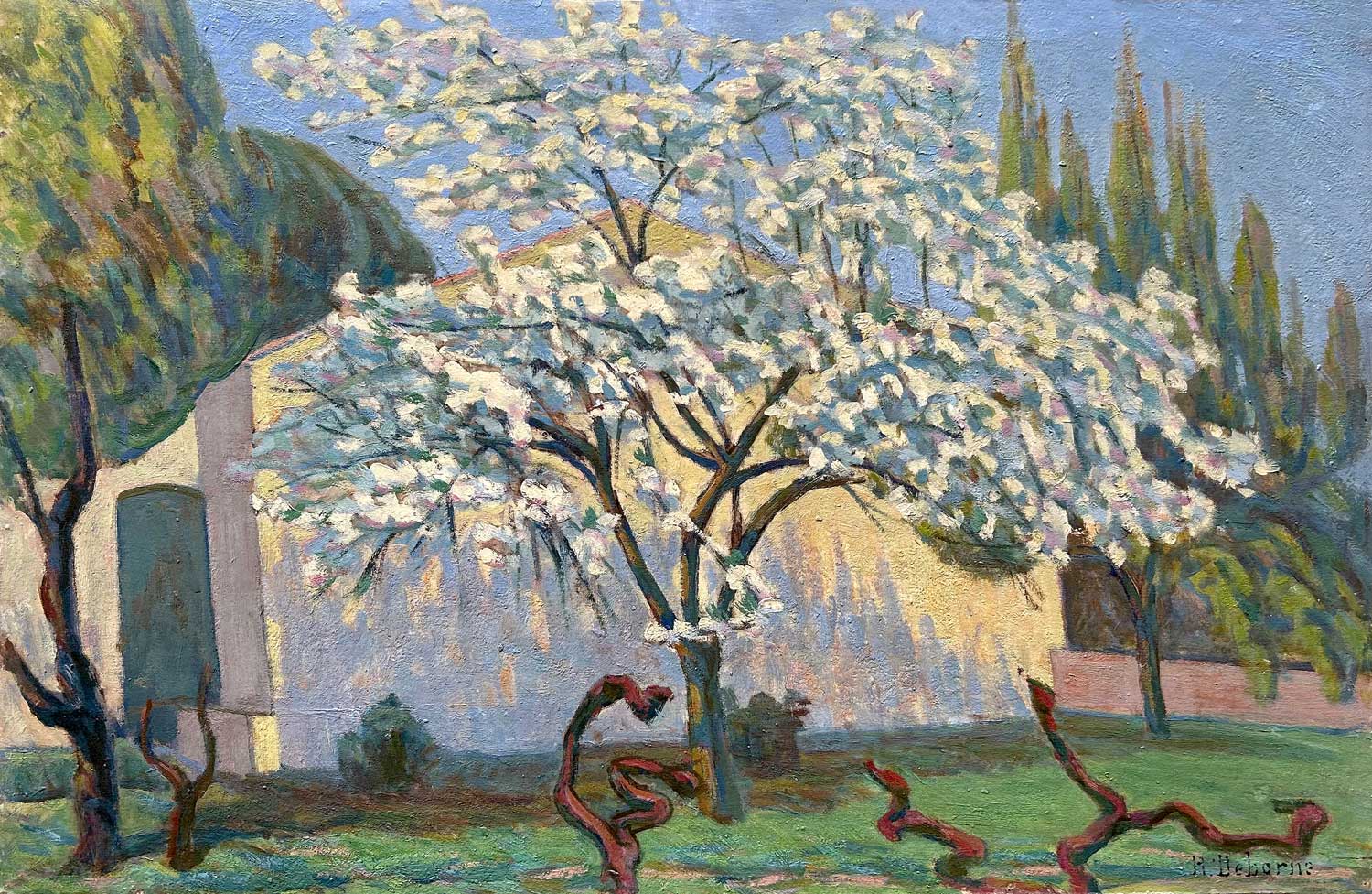

In late 19th century France, a new artistic movement known as Impressionism had emerged, and was taking the Western art world by storm. This movement privileged the depiction of real world scenes over classical and academic subject matter, emphasising the use of light and colour to define moments in time. The critical invention of ready-mixed paint tubes enabled artists to paint en plein air, capturing scenes of life and nature in real time.
Impressionism was polarising, with academicians decrying the movement as going too far whilst other artists simultaneously argued that it didn’t go far enough. From this latter group emerged the Post-Impressionist phase, a group of artists who sought to push the boundaries of Impressionism. Intriguingly, this group did not define itself - instead, it was British art critic Roger Fry who developed the term ‘Post Impressionist’ in the early 1900s, almost two decades after the first Post-Impressionist inclinations began to appear in the works of Seurat and Cezanne.
The artists we now categorise as Post-Impressionist often began their artistic careers as Impressionists, before breaking away from their style to favour an approach to art that relied on the subjective. Post-Impressionists prioritised the composition and symbolic resonance of a painting, contrasting with Impressionism’s focus on fleeting naturalism. How the artists prioritised these abstract features, however, was often deeply individual - there was no cohesive visual aesthetic for the Post-Impressionists, with the term uniting micro-movements as diverse as Cloisonnism, Symbolism and Fauvism. Despite the differences between these movements, there are a number of similarities in their approaches.
On the whole, colour was seen as a vessel through which emotions and meaning could be conveyed, and so Post-Impressionist works often employed non-naturalistic colour and lighting, as seen in the vibrant works of Gauguin and Van Gogh. Seurat in particular is seen as emblematic of the Post-Impressionist approach to colour, with his formulation of ‘optical mixing’ through Pointillism and colour theory. This intense focus on colour was undoubtedly influential in the formation of the Fauvist movement. Additionally in Post Impressionist works, there is also a distinct emphasis on form, with structures being simplified down into their fundamental elements - for Cezanne, this took the form of an intense focus on geometrical shapes, in a precursor to Cubism.
If Impressionism had been controversial, then Post-Impressionism was verging on heretical. When Fry displayed a series of Post-Impressionist works at the Grafton Galleries in the early 1910s, the reaction they received was overwhelmingly negative. Since then, however, Post-Impressionism has been reevaluated and is now considered to be one of the most crucial movements in modern Western art. The movement paved the way for the birth of abstract art, and set a standard for artistic experimentation.
Darnley Fine Art holds an impressive collection of artworks by renowned Post-Impressionists, from the intimiste scenes of Henri Lebasque, to the sweeping Fauvist landscapes of Robert Deborne, to the vibrant scenes of daily life of Henri Ottmann. Our collection truly demonstrates how expansive the Post-Impressionist movement is, and provides a unique opportunity to own an artwork with its roots in one of the most critical turning points in Western art.


